“This is a mechanism validated by the Bank of Central African States (BEAC) in November 2021. It consists of issuing Treasury Securities through a group of Treasury Securities Specialists (SVT), called Syndicate for the occasion and led by a leader”.
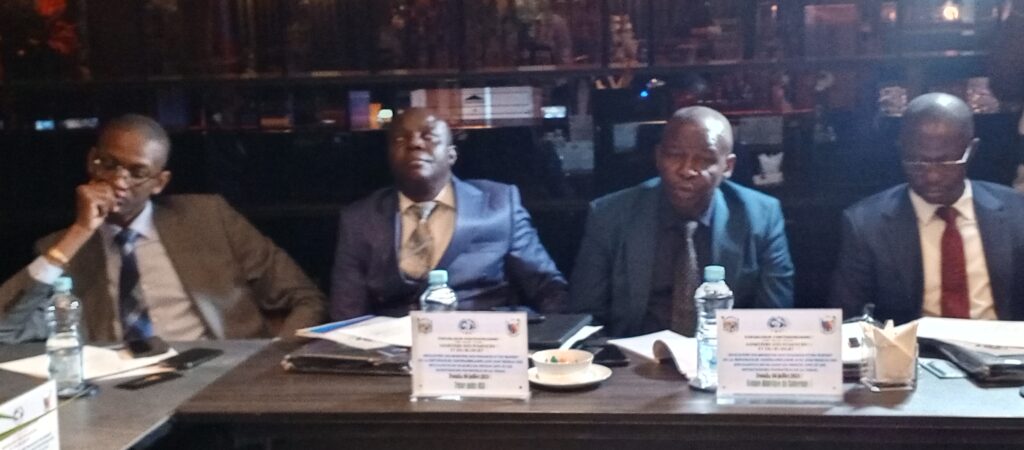
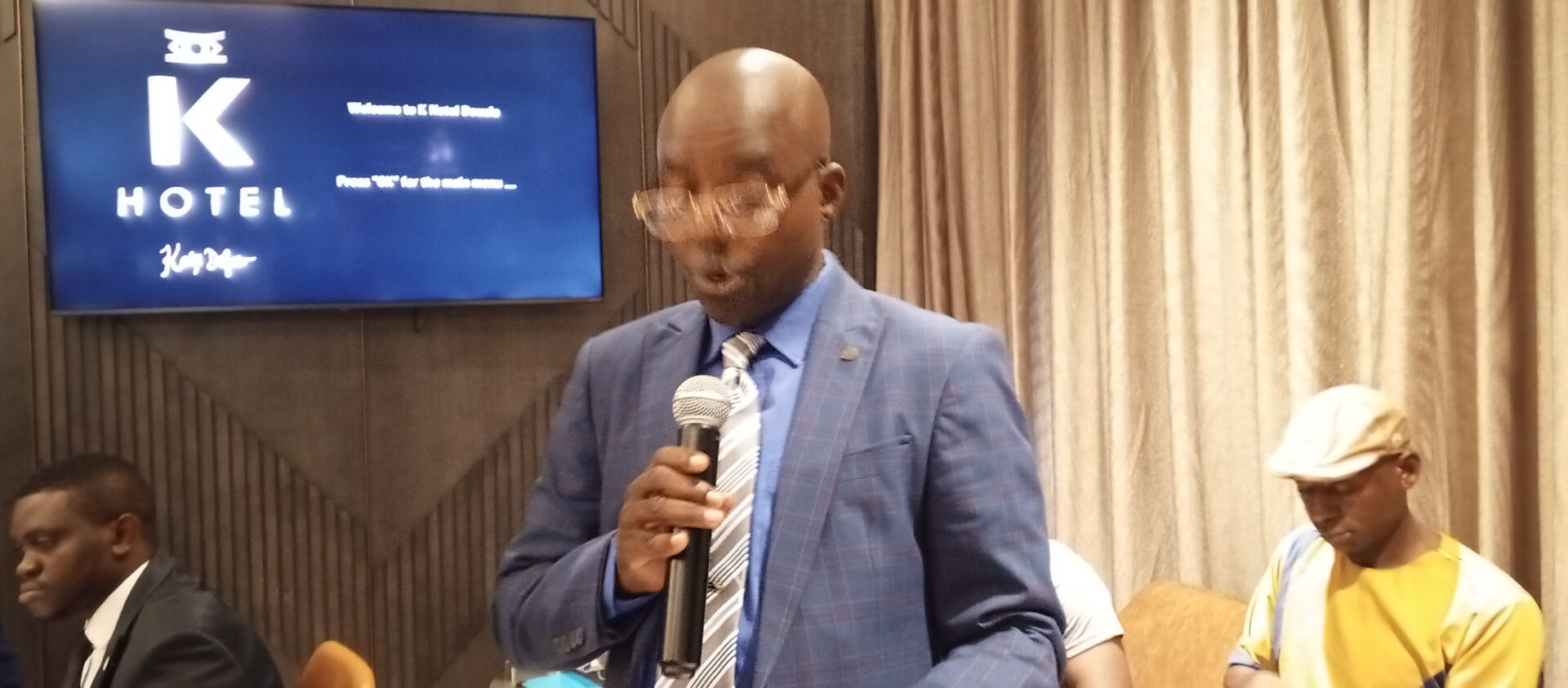
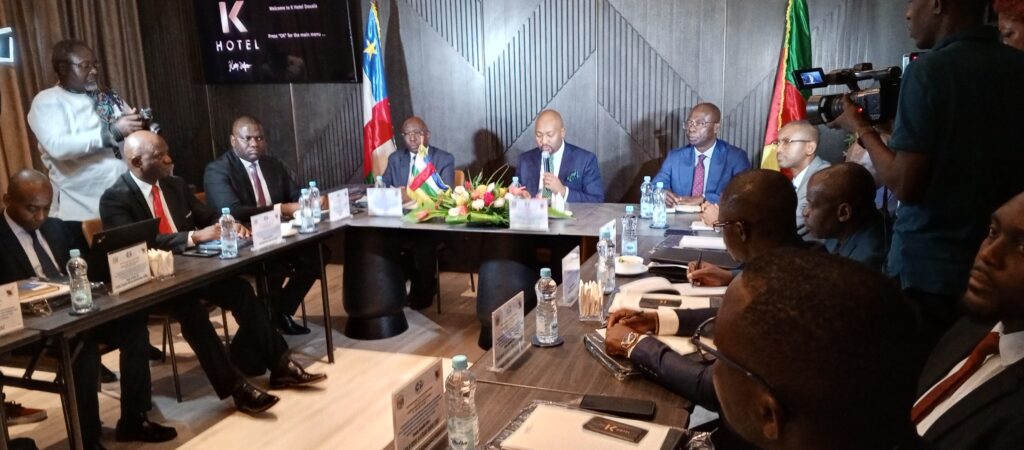
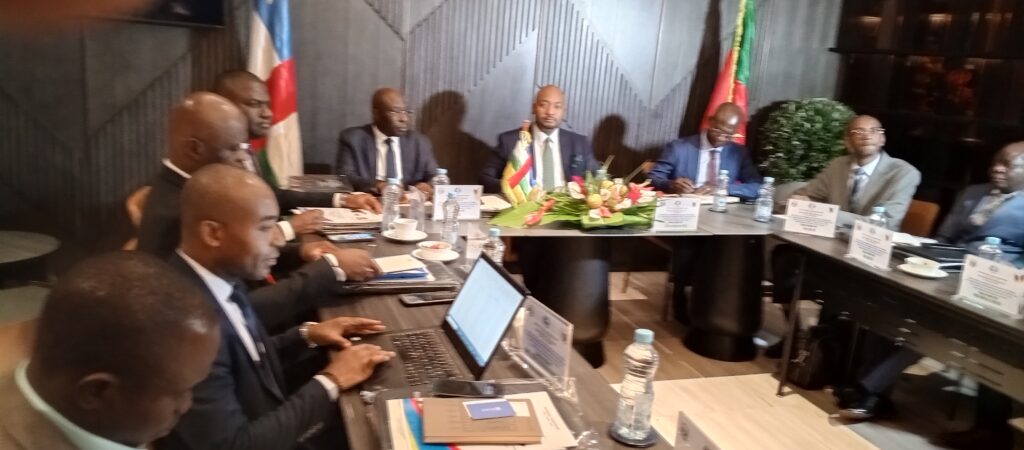
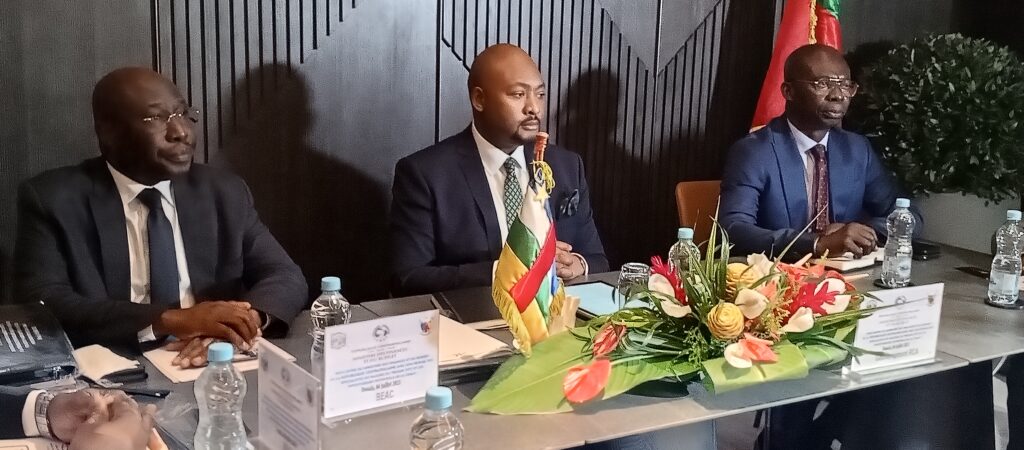
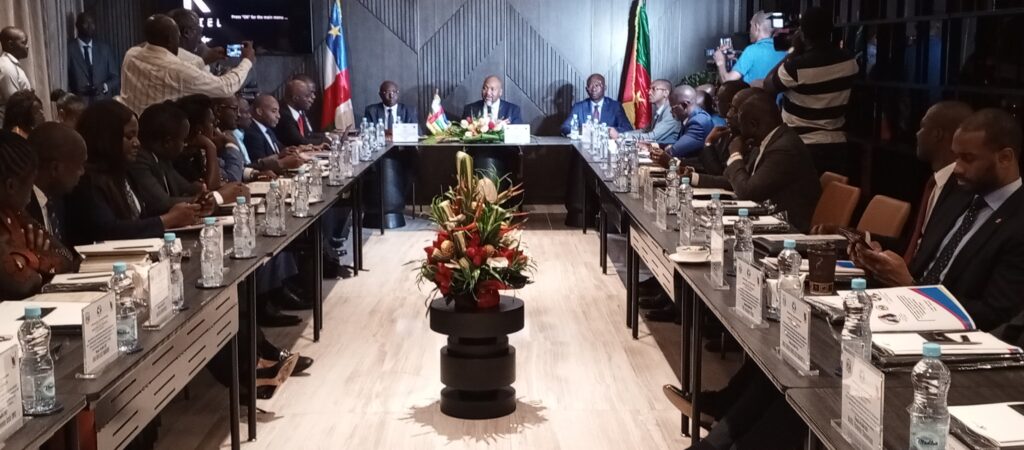
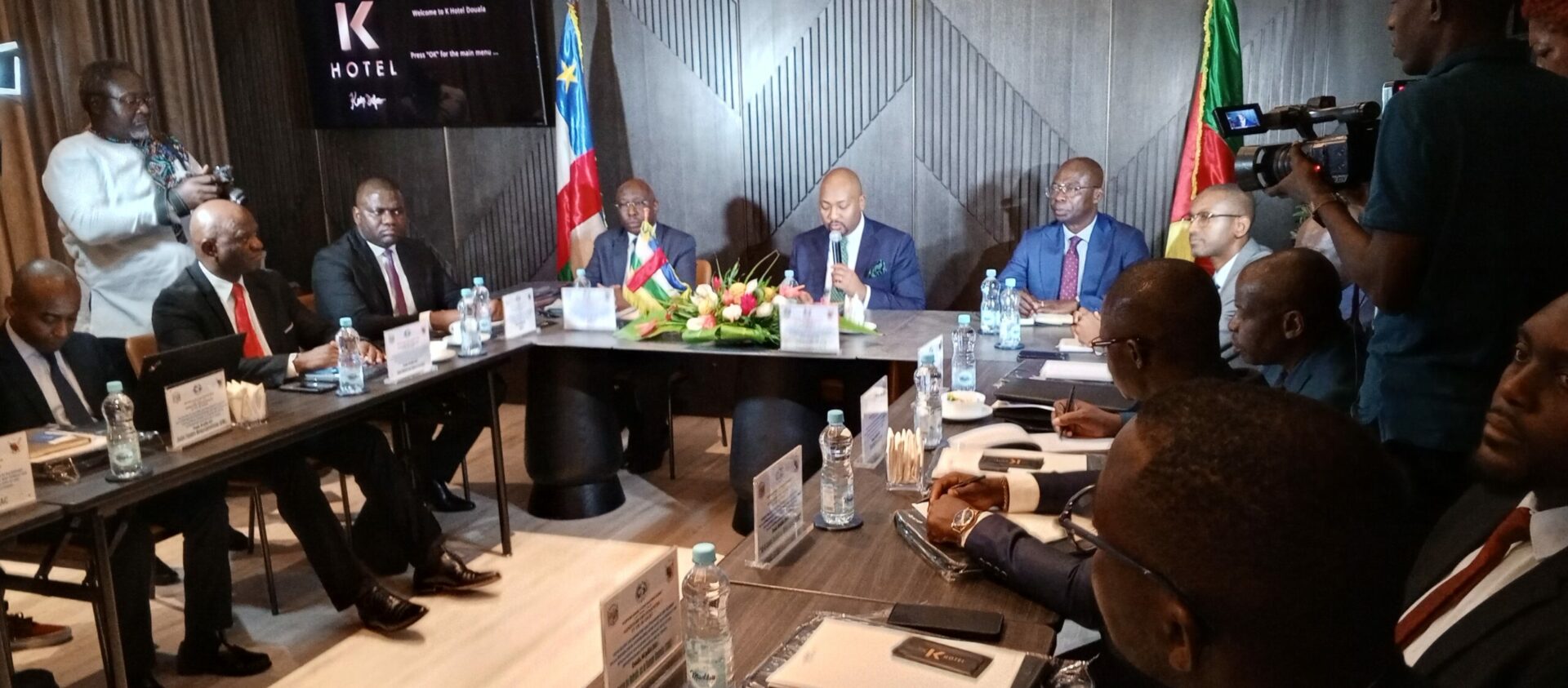
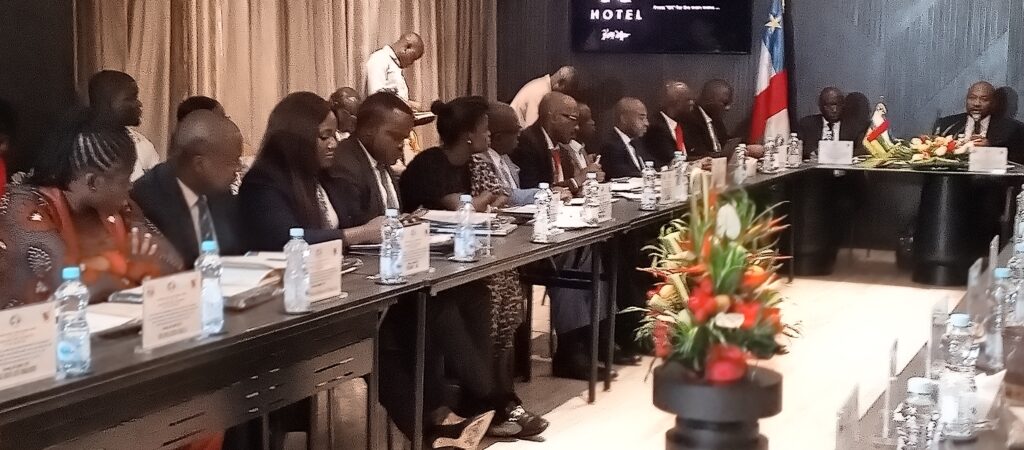
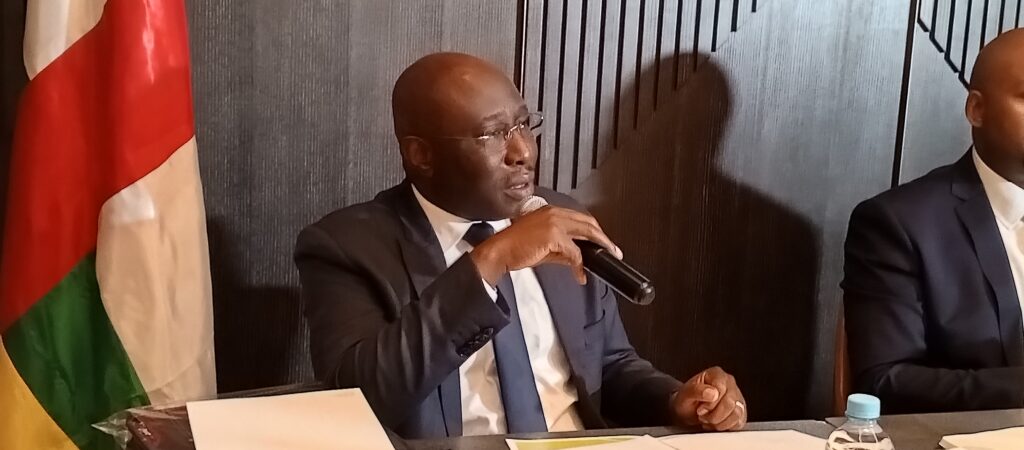
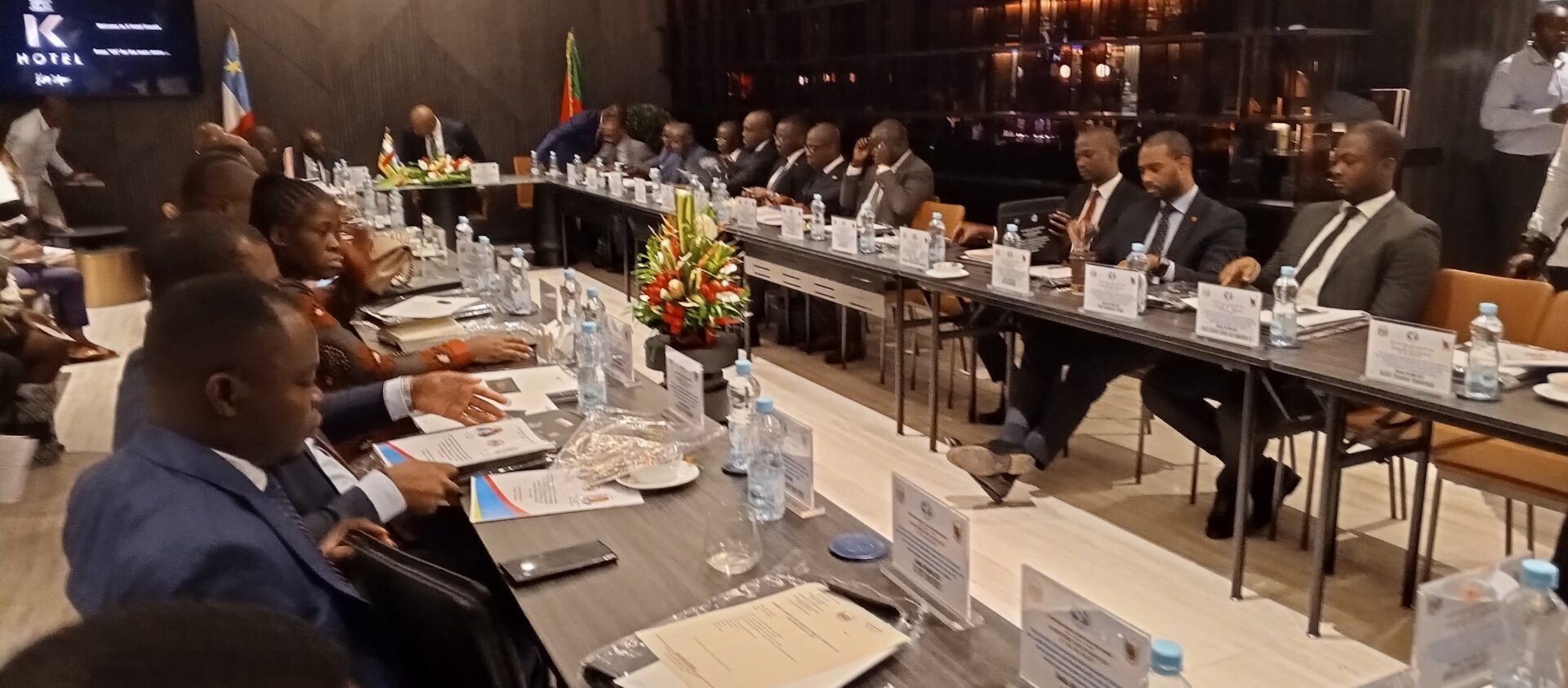
This is the first time that the Central African Public Treasury has used this intervention technique on this market. The Minister in charge of finance and budget Hervé NDOBA made it known on July 4, 2023 at Kadji Hotel, Douala-Bonanjo.
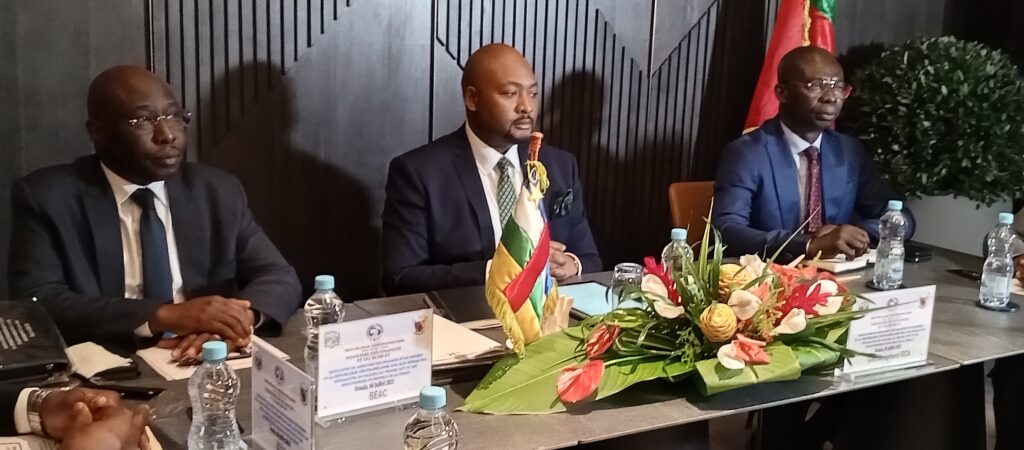
It was at the second consultation meeting with Specialists in Treasury Securities (SVT) and investors in the financial market of the Cemac sub-region.
The meeting between SVT, investors within the framework of the intervention of the Central African Republic on the Treasury securities market is becoming a tradition. It is a communication exercise that the CAR has undertaken with the network of investors in order to be able to provide relevant and precise information on the various reforms that the country has undertaken at the level of the Ministry of Finance and the budget in a specific way. But in a general way, to give the true information, just on the various aggregates that the country has, especially what is done at the level of the reforms and the beginning of the results already recorded of these reforms which it is advisable to consolidate; informed the head of the ministerial department Hervé NDOBA.
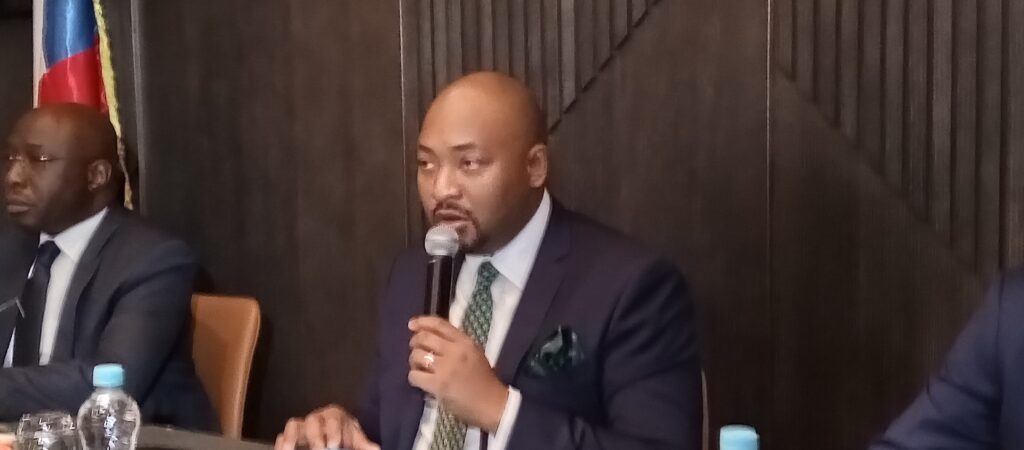
« We are preparing to initiate a domestic syndication for an amount of approximately 25 billion, an indicative amount for the time being. We are delighted to have had important exchanges with the entire network of SVTs, investors, who are Many came at our invitation and whom we thank and welcome. We are hopeful that this domestic syndication will take place under better conditions and will be crowned with success, » the Central African Minister in charge of finance and budget told the press.
* Reasons for hope.
The optimism of the treasurer of the government of the Central African Republic is not blissful. The country has a quality signature that allows it to comfortably intervene before SVTs, investors and donors and to raise funds.
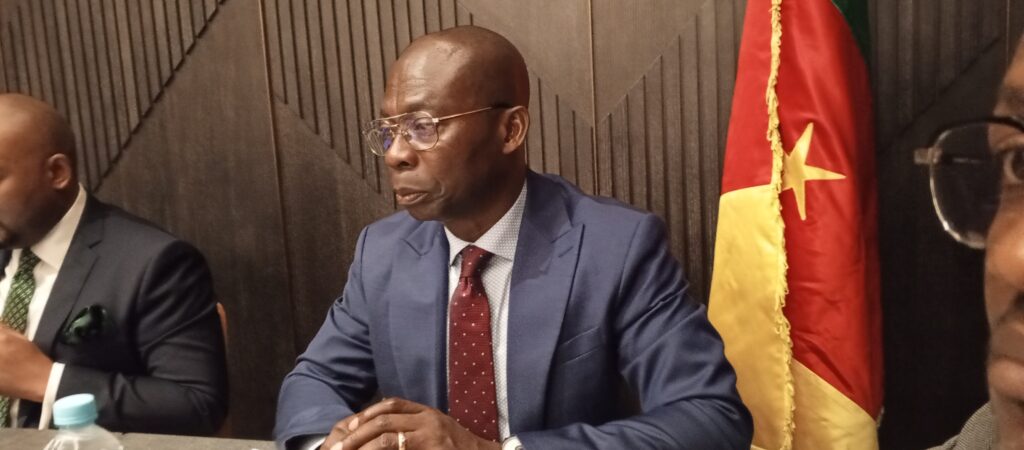
The first constituent element of the quality of a State's signature is the absence of payment default, recalled that Hervé NDOBA still needed it. Before continuing: "We have said it we repeat, since the RCA began its interventions in 2011 on the financial market, it has never experienced a payment default. What is more, we are helped in this by the central bank which accompanied us through a mechanism, a mechanism which consists in the application of automatic debits on the Treasury account when we reach the maturities of the public securities to which the various investors have subscribed".
The words of the Central African Minister in charge of finance and the budget since 2021 were confirmed by (the Director General of) the central bank (Beac) at this meeting: "We who closely follow the schedules of these public securities, we see how the Central African government makes it a point of honor to respect its signature, to always improve it". Something to reassure each other. Even in a context of multifaceted crises and their consequences: socio-political crises and other internal challenges, Russian-Ukrainian war, at one time blockages of the Bangui-Douala corridor, cash flow difficulties due to the non-disbursement or non-financing of some of its partners. ..., the CAR has always honored its commitments.
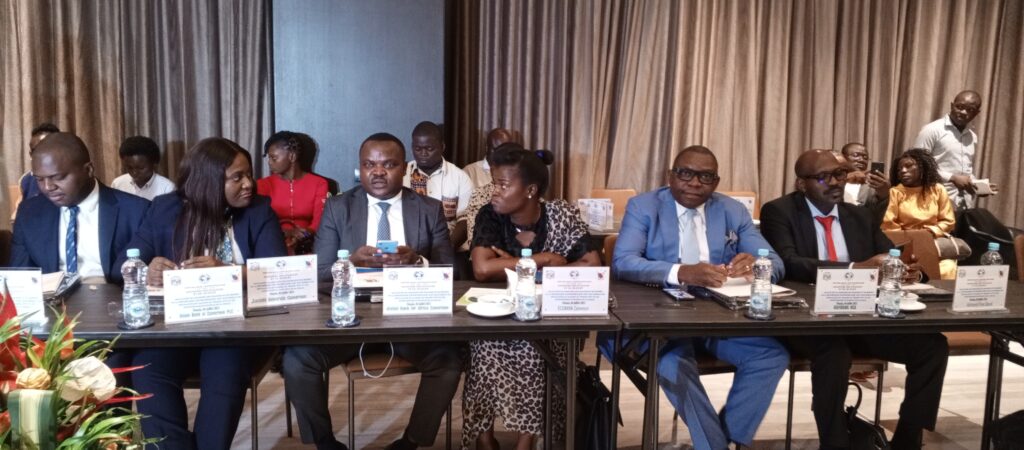
Speaking of the progress made, the central bank noted with satisfaction: "The CAR is with or after Cameroon the second country to enter the public securities market in 2011. Even if it was timid. The first issues of the CAR have amounted to approximately 1.6 billion to increase gradually and reach 9.5 billion in 2018. Today, at the end of May 2023, the amount outstanding is close to more than 12.3 billion. The progress made is enormous. Even if this represents only about 1.9% of the overall outstanding at the level of the CEMAC sub-region. When we consider the progress in relation to the reforms and in view of the prospects in relation to the margins, there is still opportunities to enter these markets.
* An extremely ambitious reform program.
In October 2021, 3 months after taking office, the new Minister of Finance and Budget Hervé NDOBA organized an important seminar, the first of its kind. From which came more than 276 recommendations on several themes: the mobilization of domestic revenue, the optimization of expenses, digitalization, etc. The new program financed by the Extended Credit Facility was approved by the International Monetary Fund (IMF) on April 27, 2023. Most of the reforms were included in it. Today this program serves as a compass in the context of reforms.
On the mobility of domestic resources, the CAR has, according to the Minister of Finance and Budget, migrated to two (02) important applications.
At the customs level, we started from Sydonia to World. From now on, Central African customs are able to speak with Cameroonian customs, to name but one. This system makes it possible to communicate with other systems in neighboring countries to improve the quality of information and the quality of collection of customs duties.
At the tax level, the country has made a migration, an evolution of an important system which allows to pass to the teledeclaration and the telepayment. This is a major development that allows for completely dematerialized information to improve the cross-referencing of information, the tax department. Despite the difficult economic situation that all countries are going through,
These are all reforms which, together with the return of donors and their diversification, are founding the confidence and optimism of Central Africans. With regard to the diversification of donors, the Minister in charge of finance and budget Hervé NDOBA announced within the framework of this second communication meeting with SVTs and investors that they are engaging in an important round table with donors and funds. Islamic and Arabic, which will be held next October. This will be on the sidelines of the World Bank Group's IMF Annual Meetings in Marrakech, Morocco. It will be for the CAR to strengthen the diversification of its donor portfolio in order to be able to continue investing in the country. A country reassured by Hervé NDOBA, the portfolio of donors is already constantly increasing. The project portfolio is financed by the World Bank and the African Development Bank (ADB) and the European Union (EU).
"An increase beyond measure compared to what we have experienced in previous years. Suffice to say that with these various portfolios totaling nearly 1,500 million dollars, we have faith in our ability to finance investments, to address investments in the basic social establishments which are extremely important for our populations but also to encourage investment in the productive sectors, in particular agriculture where we believe that we really have a lever and which can allow us to make a difference and in a persistent".
*Securitization of bank debt and domestic debt: role of the central bank with the RCA to support it and strengthen its credibility.
In the case of the reforms undertaken at the level of the Ministry of Finance and the budget, with the support of the central bank, in 2017 the government undertook major reforms for the settlement of the domestic debt (commercial debt, social arrears, bank debt). In 2017 bank debt accumulated around 25 billion. There were negotiations with the support of the central bank, and 4 local credit institutions to move towards the securitization of this bank debt. Among the commitments made by the Central African government is to authorize the central bank, in accordance with a signed protocol, to carry out automatic debits on the account of the Public Treasury to transfer the resources to the escrow accounts created for each credit.

"To date, out of the 25 billion in domestic debt, the Central African government has already cleared almost 17 billion. Whether in the case of securitized bank debt, in the case of the public securities market, despite the rather difficult context, the CAR does not go bankrupt when the time comes to pay its debt. Thus, the central bank can attest to its credibility: "Today the CAR has practically capitalized on the expertise in this area. The bank debt securitization mechanism began with the RCA. We are now talking about the securitization of domestic debt. All these mechanisms started with the RCA". that of securitization
Vanessa Tchap's