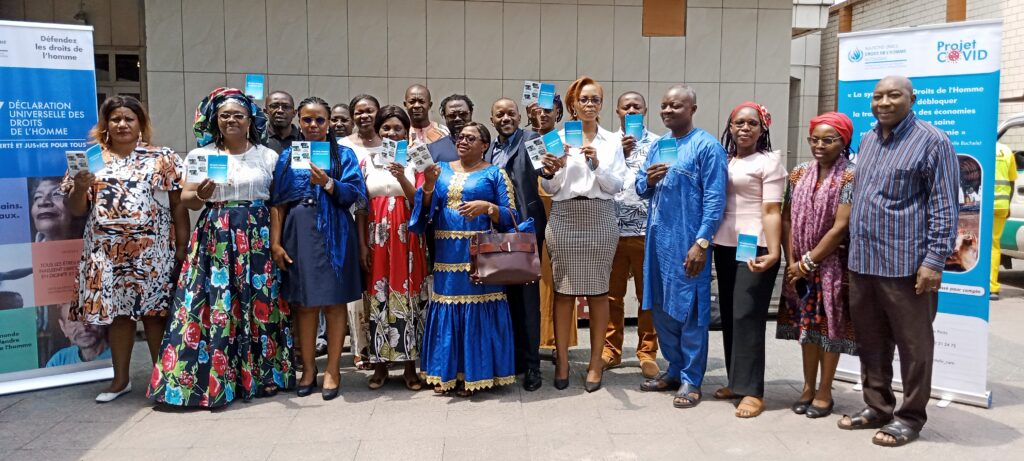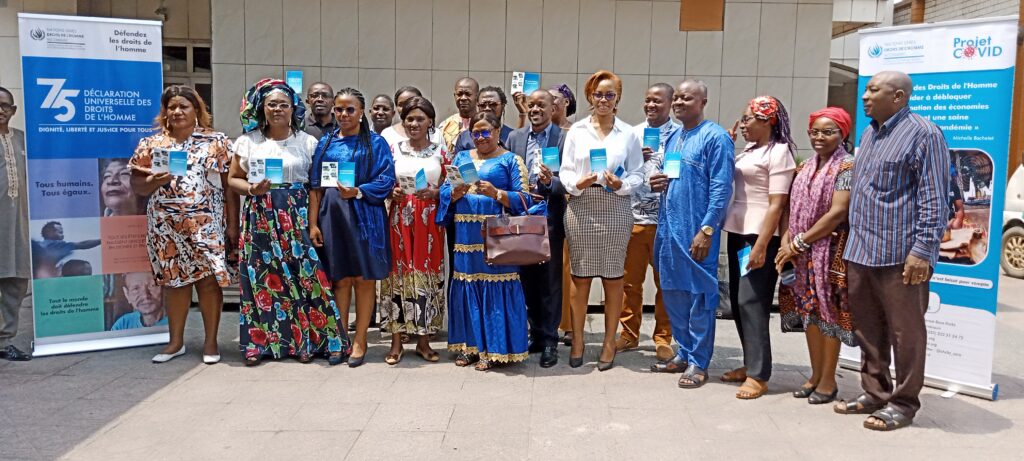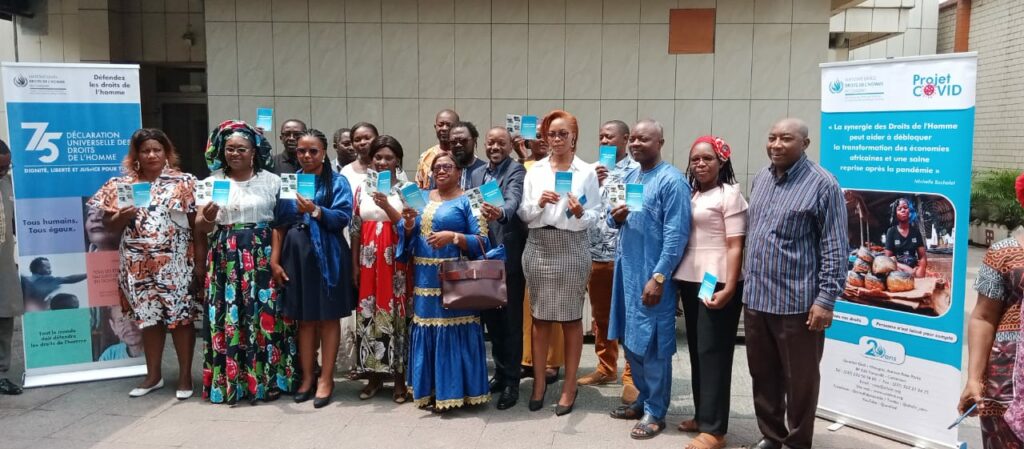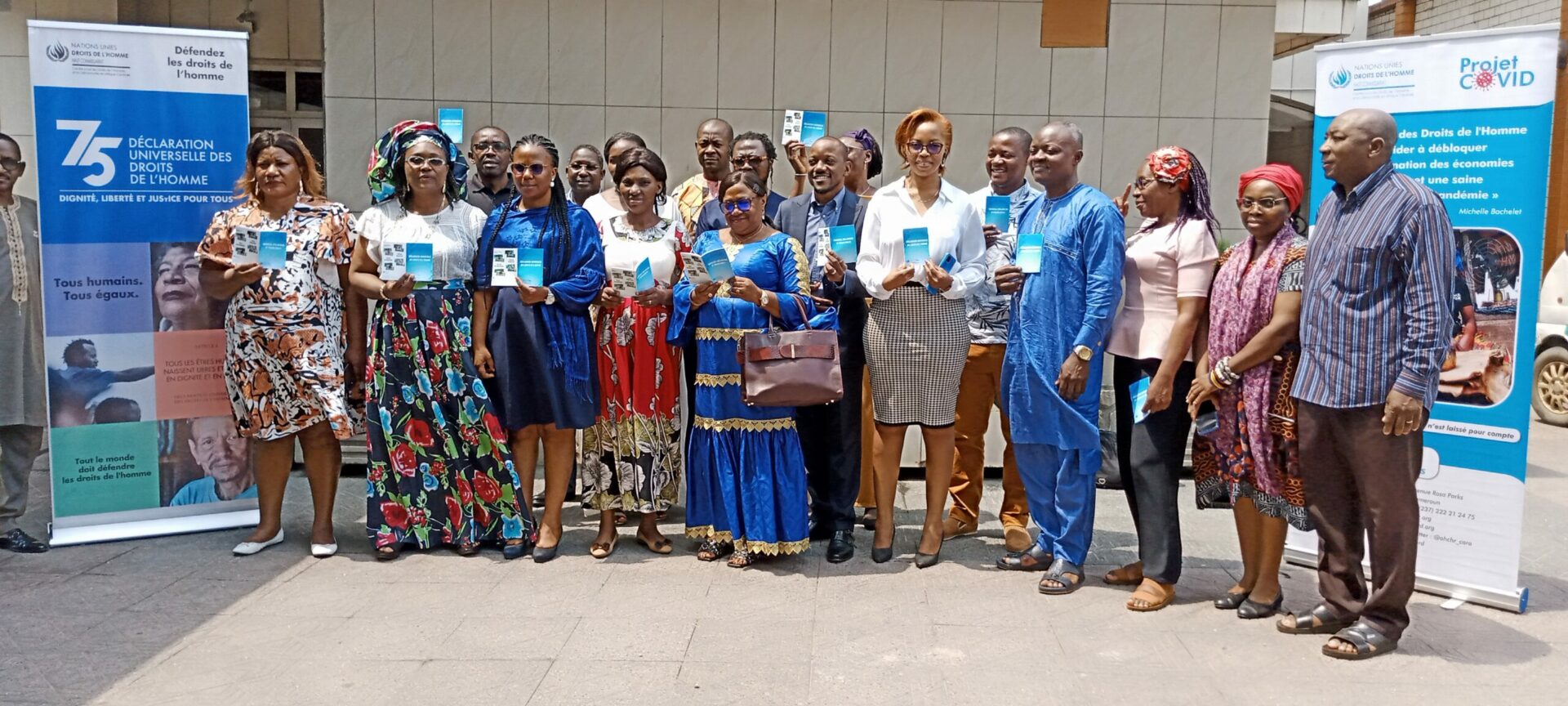
« You know that this year, we are celebrating the 75th anniversary of the Universal Declaration of Human Rights, it is also the opportunity that we have seized to publish and talk about this report so that national authorities, partners in development and civil society organizations and all populations can through this report become aware of their rights. You know that women and children are the most vulnerable people in our society. We want the rights of its vulnerable populations to be respected”
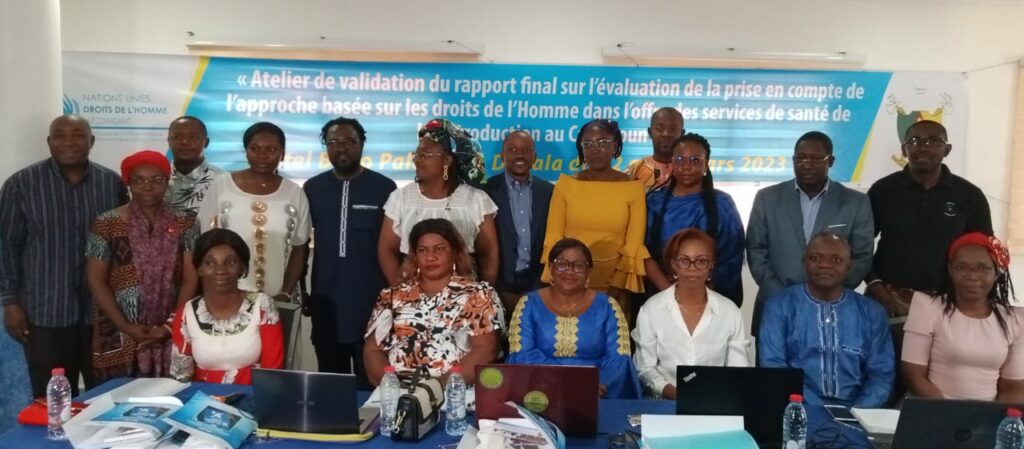
Dixit Joyce ENDELEY Member of the CNUDH-AC representation in Cameroon, at the opening this Thursday, March 02, 2023 in Douala, of the validation workshop of the final report on the evaluation of the consideration of the approach based on human rights in the provision of reproductive health services in Cameroon. Organized by the Regional Office for Central Africa of the High Commissioner for Human Rights.

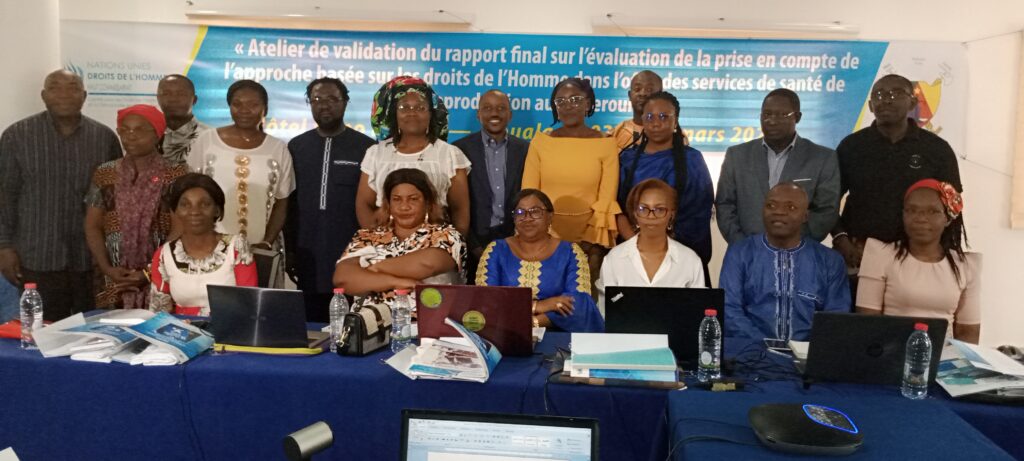
As a prelude to the celebration this year 2023 of the 75th anniversary of the Universal Declaration of Human Rights (UDHR) adopted on December 10, 1948, the United Nations Center for Human Rights and Democracy in Central Africa organized from March 2 to 3, 2023 in Douala, a validation workshop for the evaluation of the consideration of the Human Rights-Based Approach (HRBA) in the provision of maternal health services in health facilities of four Emergency Obstetric and Neonatal Care (SONU) Networks in the East and North regions of Cameroon in the context of COVID-19.
"It was intended to validate the assessment that was made in Cameroon to assess respect for human rights in the consideration of maternal and child health," said Dr. Foguito, participant.

Indeed, it was a question of presenting the preliminary results of the collection and collecting feedback from health professionals and other actors in the chain.
“It shows that the populations benefiting from health services do not have an appreciation of their rights, but also those who were supposed to guarantee their rights did not know them. Most of the time, when a woman was asked in a health center if her rights were respected as a pregnant woman or a woman who had a baby, she said yes. Because for her, rights are linked to civil and political rights. This meant that she did not have a good appreciation of their rights. In fact, she forgets that because there is no midwife, doctor, nurse's aide, in the health center of her village, medicines, it is a violation of her rights ", explains Dr. Foguito.

This assessment of the project's multi-stakeholder coordination group identified gaps and challenges constraining efforts to ensure universal and equitable access to affordable, acceptable and quality sexual and reproductive health services, goods and resources, in particular for women and disadvantaged and marginalized groups.
According to the report, these gaps are linked to challenges relating to the availability of care and services; the stigmatization and ostracism of women with obstetric fistulas; the lack of statistical information on vulnerable women and girls at health facilities, several essential products and drugs are not available; insufficient infrastructure and sanitary facilities. The expectations of women and girls of childbearing age vis-à-vis health actors and professionals, community leaders and national administrations who have an important role to play in the realization of their right to maternal health. The main sources and challenges of financing the health facilities surveyed, namely Performance-Based Financing (PBF); user payments; Government (BIP, subsidies); Bilateral partners; individual donations; municipalities; and multilateral partners. And to make the related recommendations, as well as those to ensure a minimum level of access to maternal health care and services.

Ranked 18th among the countries with the highest maternal mortality ratio in the world. Maternal mortality fell from 669 to 782 deaths per 100,000 live births in Cameroon between 2004 and 2011. Figures which decreased by 40% to reach 406 deaths per 100,000 live births between 2012 and 2018. However, it has been shown that a major obstacle to the realization of the right to maternal health in Cameroon concerns the improvement of the availability, accessibility, acceptability, and quality of maternal health care and services for women and girls in childbearing age, especially those at risk of being left behind in the target regions.
This is mainly due to several factors, namely: - insufficient attention paid to the social determinants of health and the lack of minimum essential equipment and infrastructure; - political constraints; - governance challenges; - under-investment due to the unequal distribution of financial resources; - and Cameroon's strong dependence on international cooperation for the financing of maternal health programs.

It was also noted that the budget allocated to the health sector has varied from 3.8% to 5.9% over the last decade. A figure considerably lower than the 15% the government pledged to allocate to the health sector as a signatory to the 2001 Abuja Declaration and lower than the health budget of most African countries including countries with lower GDP. The World Bank, for its part, mentioned insufficient public expenditure for maternal health programs and discrepancies in the allocation of financial resources between regions that have more sophisticated types of health establishments such as in the South region and poorer regions such as the North and the Far North which have fewer more basic establishments and less funding.

Representing the second largest share of international aid, it is similarly revealed that maternal, child and adolescent health programs for the year 2015 alone, it is estimated that 22 billion FCFA were devoted to these programs, i.e. 33, 8% of contributions from technical and financial partners. 25 billion FCFA, or about 38.4% of these contributions, were devoted to the promotion of health and the fight against disease, while 18.1 billion FCFA, or about 27.8% of this budget, were used for the development of health districts.
Data highlights the government's dependence on external funding for maternal health and its inability to tap into available domestic resources to fund maternal health projects. These gaps and challenges have been compounded by the outbreak of the COVID-19 pandemic in Cameroon, which not only affected the health system but also impacted the availability, utilization and quality of care and services. maternal health services in health facilities.

It is aiming to reduce the maternal mortality rate to 70 cases per 100,000 live births and has adopted many maternal health policies, strategies and plans to achieve the targets set by the government. In particular, the national multipartite program to combat maternal, neonatal and infant mortality in Cameroon (PLMI) and the universal health coverage program which targets pregnant women and children under five years old, which the children's rights committee of the United Nations in 2017, suggested to the Cameroonian government to increase its budgetary allocations for primary health care in order to make it both accessible and affordable to implement the planned strategic programs, in particular the health sector strategy 2016-2030 given the high rates of maternal and neonatal mortality, and child malnutrition.

It is important to remember that during the last Universal Periodic Review in 2018, it was recommended that the government take all necessary measures to reduce maternal mortality.
BY NGM